
Foam Wash Versus Hand Wash: Which Cleans Better?

A thick layer of foam sliding off a vehicle looks satisfying, but appearance alone does not tell you how clean the paint actually is. In the foam wash versus hand wash debate, the better choice depends on the soil level, the condition of the paint, and whether the goal is a quick refresh or a properly maintained finish.
For most North Jersey vehicles, a professional wash process uses both methods for a reason. Foam helps loosen grime before anyone touches the paint. A careful hand wash removes the remaining film safely. Knowing the difference can help you choose the right service and avoid the swirls, water spots, and dullness that come from rushed washing.
What a Foam Wash Actually Does
A foam wash usually begins with a foam cannon or foam gun that applies a pH-balanced soap mixture across the exterior. The foam clings to the vehicle for several minutes, giving the cleaning agents time to soften loose dirt, pollen, road salt residue, bug splatter, and everyday traffic film.
Its biggest benefit is lubrication before contact. When a vehicle is covered in dry grime, wiping it immediately with a mitt or towel can drag abrasive particles across the clear coat. That is one of the most common causes of fine swirl marks. Foam helps carry away some of that contamination during the rinse, reducing how much dirt remains when the hand wash begins.
Foam is especially useful after rainy commutes, long highway drives, or winter conditions around Linden and surrounding areas. Road grime does not always look dramatic, but it can build up along lower doors, rocker panels, wheel arches, and the rear of the vehicle. A pre-rinse followed by foam gives those areas a safer starting point.
Still, foam is not magic. It does not dissolve every bonded contaminant, and it cannot reliably remove the thin film of dirt that remains after the suds rinse away. A foam-only wash can make a vehicle look better quickly, but it may not leave the paint truly clean.
When a Foam-Only Wash Makes Sense
A touchless foam wash can be a smart maintenance option when the vehicle is already in good condition and only lightly dusty. It works well between full details, especially for a ceramic-coated vehicle that has been properly maintained. Coatings make it easier for dirt and water to release, so a strong rinse and quality foam can remove a meaningful amount of surface contamination.
It is also useful when reducing physical contact is the priority. If the paint is covered in loose dust or pollen but does not need a deep clean, avoiding unnecessary contact can help preserve a delicate finish. This does not mean touchless washing is always safer, however. Some automatic touchless systems rely on stronger chemicals to compensate for the lack of hand agitation. Those chemicals can be harsh on trim, waxes, and neglected finishes if used repeatedly.
A professional foam pre-wash is different from simply spraying heavy soap and hoping for the best. Product selection, dwell time, water pressure, and a thorough rinse all matter. Leaving soap to dry in direct sun can create streaking or spotting, particularly on dark paint and glass.
Why a Hand Wash Delivers a Deeper Clean
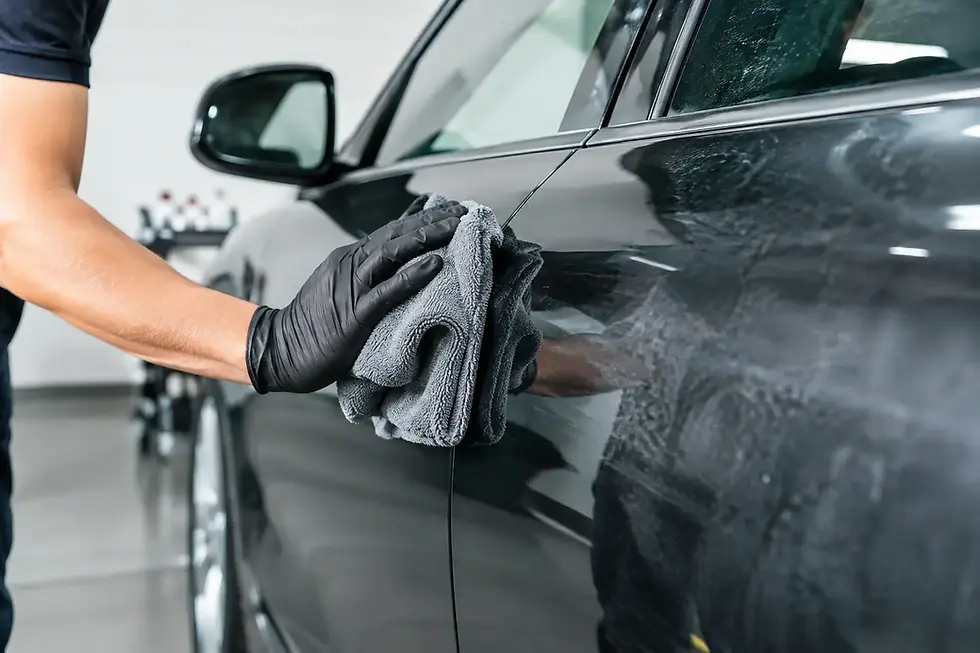
A hand wash uses controlled contact to lift the film that foam cannot fully remove. With clean wash mitts, proper lubrication, and frequent rinsing, a technician can clean each panel with far more precision than a touchless wash alone.
The key word is controlled. A quality hand wash is not the same as rubbing a sponge over a dirty vehicle. Professional detailers start at the cleanest areas, work downward, use dedicated tools for wheels and lower panels, and keep wash media free of grit. This approach minimizes the chance of transferring brake dust, sand, or road debris onto painted surfaces.
Hand washing also gives the technician an opportunity to inspect the vehicle closely. They can spot embedded bugs, sap, tar, oxidation, failing trim, paint chips, and contamination around emblems or door handles. Those details matter because a vehicle can look clean from ten feet away while still carrying buildup that affects its finish over time.
For vehicles with heavy grime, a hand wash is the more complete option. Think of a family SUV after weeks of school drop-offs, a commuter sedan that has seen highway construction dust, or a vehicle that has gone through several salted winter drives. Foam loosens the mess. The hand wash finishes the job.
Foam Wash Versus Hand Wash: The Real Difference
The simplest difference is that foam wash is primarily a preparation and loosening step, while hand washing is the step that provides targeted cleaning through safe agitation. They are not always competing services. In a proper exterior detail, they work together.
A foam wash has the advantage when the goal is to reduce dirt before touching the paint. It is fast, visually effective, and valuable for maintenance. A hand wash has the advantage when the goal is a consistently clean surface, detailed attention around trim and badges, and a better foundation for protection products.
The trade-off is time. A foam-only service may be quicker, but it can leave behind traffic film and contamination. A careful hand wash takes longer because the technician is working panel by panel, cleaning wheels separately, addressing crevices, and drying the vehicle correctly. That extra time is often what separates a temporary clean look from a refreshed exterior.
The Biggest Risk: Poor Technique, Not the Method
Neither foam nor hand washing automatically protects paint. Poor technique can make either method a problem. Using an overly aggressive degreaser, allowing chemicals to dry, blasting delicate trim at close range, or drying with dirty towels can all create avoidable damage.
Hand washing becomes risky when the vehicle is not pre-rinsed, when one dirty sponge is used everywhere, or when the wash media is dropped and put back on the paint. Automatic tunnel washes create another concern: spinning brushes may be carrying grit from countless vehicles before yours. Those brushes can leave the familiar spiderweb pattern visible under sun or parking lot lights.
Drying matters as much as washing. Even a properly washed vehicle can develop water spots when mineral-heavy water dries on paint, glass, or chrome. A professional process uses clean microfiber drying towels, filtered air where appropriate, and attention to mirrors, grilles, wheel faces, and panel gaps where water hides.
How Ceramic Coatings Change the Decision
Ceramic-coated vehicles still need regular washing. A coating is not a force field against dirt, scratches, bird droppings, or road salt. What it does provide is a smoother, more water-repellent surface that makes routine cleaning easier and helps preserve gloss.
For coated paint, foam is particularly valuable as a first step because it removes loose contamination with minimal contact. A gentle hand wash should follow whenever a deeper clean is needed. Avoid abrasive brushes and harsh products that can clog the coating with residue or reduce its water behavior.
If water no longer beads or sheets as it once did, the coating may not have failed. It may simply be contaminated by mineral deposits, traffic film, or environmental fallout. A proper maintenance wash and decontamination process can often restore the surface behavior without replacing the coating.
Choosing the Right Wash for Your Vehicle
Choose a foam-focused maintenance wash when your vehicle is lightly soiled, recently detailed, or protected with a well-maintained coating. It is a practical way to refresh the exterior without unnecessary contact.
Choose a full hand wash when the vehicle has visible road film, lower-panel grime, bug residue, brake dust, or weeks of buildup. It is also the better choice before applying a wax, sealant, ceramic protection product, or any service where the surface needs to be thoroughly clean.
For the best result, choose a process that begins with foam and ends with a careful hand wash. That combination reduces friction at the start, delivers the deeper clean that paint needs, and gives your vehicle a better-looking finish when it is dried and protected correctly.
Your vehicle does not need the most complicated wash every week. It needs the right level of care at the right time. A consistent, paint-safe maintenance routine will do more to preserve gloss, protect value, and keep every drive feeling refreshed than an occasional rushed wash ever will.


Comments